Why Wood Works: Rethinking Data Center Design

Building with up to 95% wood, EcoDataCenter engineered a new path for the industry. Explore mass timber data centers.

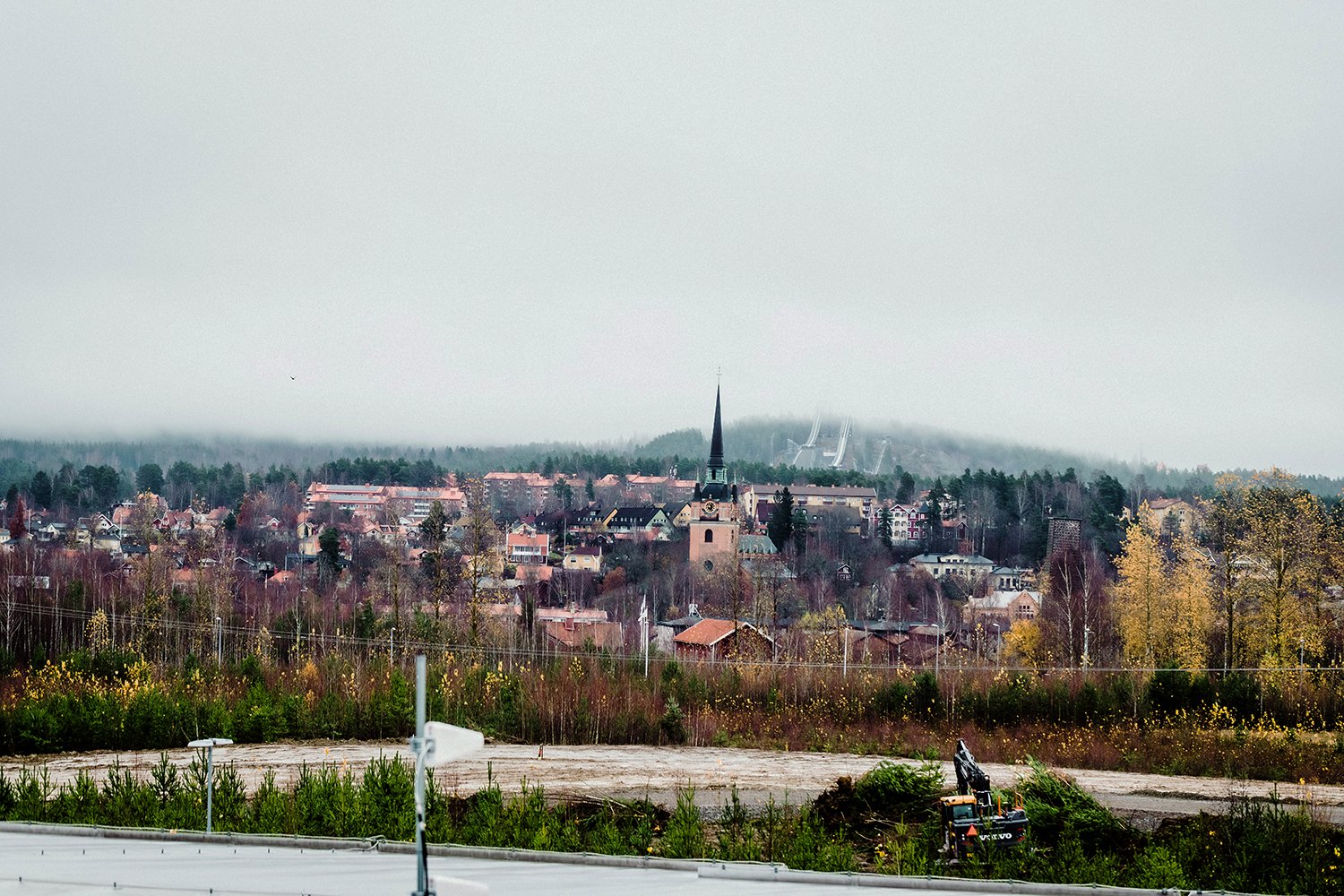
balkar falun 2025
Deeply rooted
70%

of Sweden's surface is forest

Completely circular
15mins

to regrow material for one data center

Eliminating emissions
up to95%

wood in our construction

Carbon sinks
2650tons

of biogenic CO₂e stored in one data center

Executive Summary

How Wood Solves the Scaling Trilemma

The world has entered the steepest increase in compute demand in history. Data centers face three converging challenges that arise when scaling without a sustainable foundation.

  • Embodied carbon is too high. Conventional materials such as steel and concrete make new data centers some of the most carbon-intensive mission-critical buildings. 
  • Build times are too long. Global demand for compute capacity outpaces the data center industry’s ability to bring new capacity online. 
  • Operational efficiency is flat-lining. As racks and clusters densify in the AI revolution, every percentage point in cooling efficiency and energy reuse is critical.

EcoDataCenter uses wood, specifically cross-laminated timber (CLT), to solve the scaling trilemma.

  • Wood stores carbon and forests regrow quickly, making CLT a circular material to use in critical infrastructure to radically decrease embodied carbon.
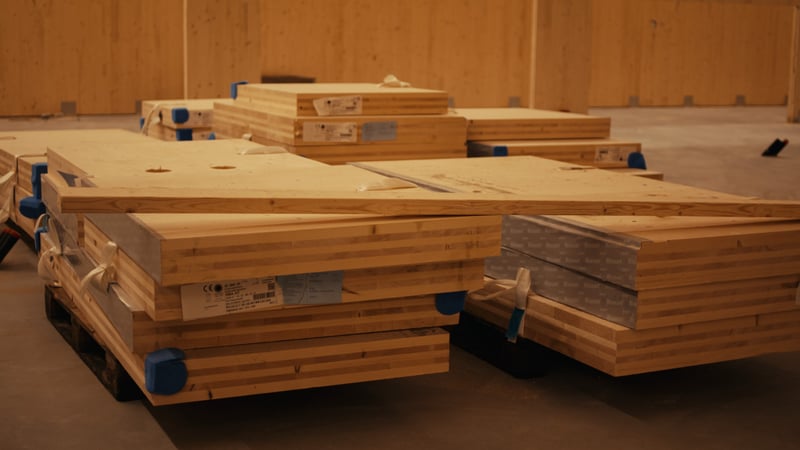
  • Precision-cut wood cuts lead times: CLT lets EcoDataCenter mass produce elements, adapt on the fly and assemble faster than conventional materials and methods.
  • Improving operations: Wood has low thermal conductivity and insulates better, showing a significant gain in operational efficiency.

Wood does not merely build infrastructure for the future. Wood creates a new benchmark for sustainable, high-performance compute.

Four core advantages of CLT

EcoDataCenter's Wooden Foundation

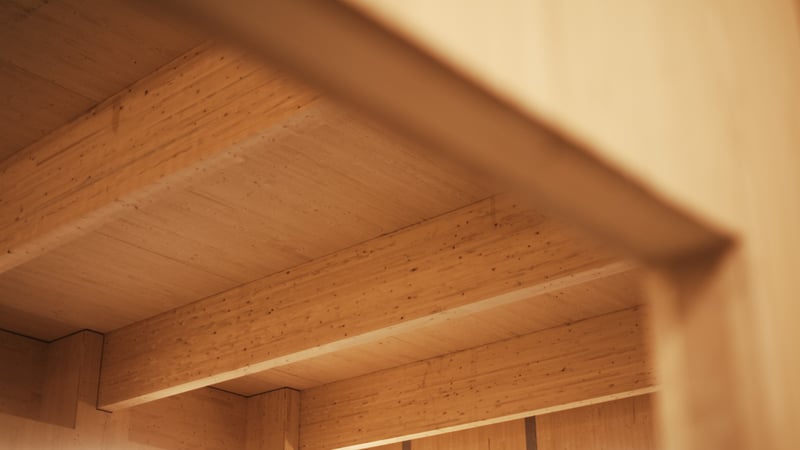
SKISS_EcoDataCenter_Falun_DSCF2811

Sustainability

Eliminating embodied CO2

With CLT, EcoDataCenter facilities shift the perspective on data centers from emissions sources to carbon sinks.

Life Cycle Assessments (LCA) show that our CLT-based facilities achieve up to 60% lower embodied carbon emissions than comparable data centers built with conventional materials.

The wooden structure, designed fully in-house, stores approximately 2,650 tonnes of biogenic CO₂e, meaning the net effect of embodied carbon from the total construction is close to zero.

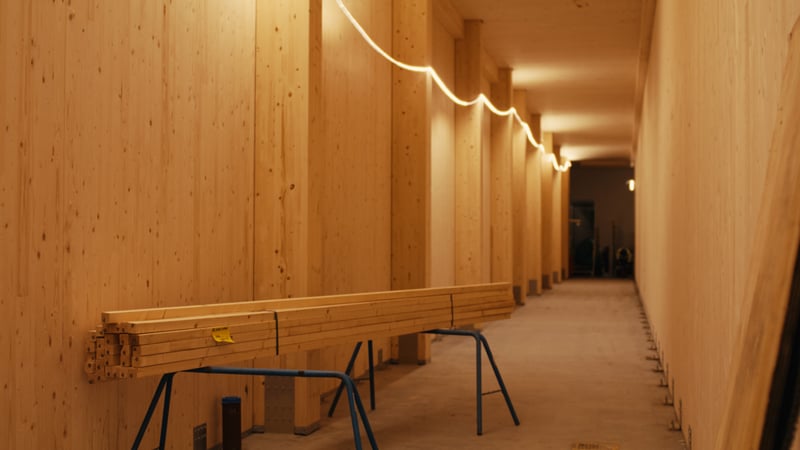
SKISS_EcoDataCenter_Falun__DSF5362

Cost efficiency

Delivering deployments

Prefabricated wooden elements like CLT shortens project schedules by 15–20% and reduces total costs by up to 30% numbers verified in internal projects and dialogues with suppliers, partners and investors.

External research about more resource-efficient wooden projects show similar findings. And according to the Swedish Council for Wood Construction, industrial wooden constructions can shorten build times with 70%. 

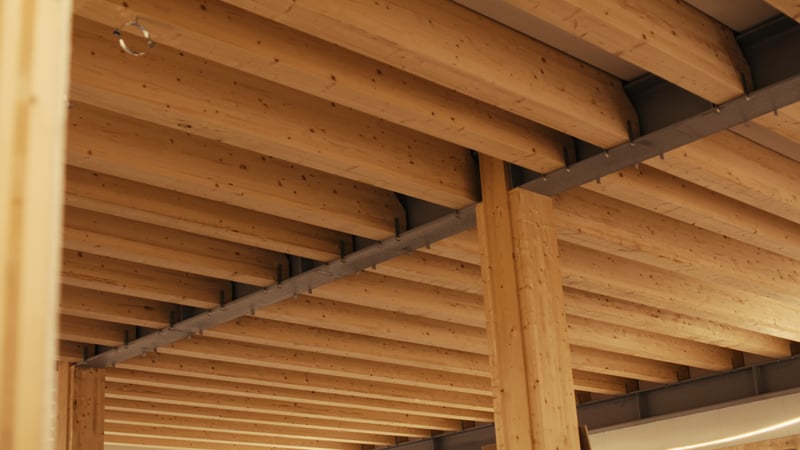
SKISS_EcoDataCenter_Falun_DSCF3076

Operational performance

Boosting compute cleanly

The superior thermal mass of wood, in combination with a lower thermal conductivity than conventional materials, contributes to lower cooling energy needs.

Combined with Sweden’s 100% renewable electricity mix and EcoDataCenter’s heat recovery methods feeding district heating systems, wooden data centers set a new benchmark for both embodied and operational sustainability.

SKISS_EcoDataCenter_Falun_DSCF2822

Fire safety

Cutting through conventions

With natural, fire-suppressing properties in large wooden elements, CLT meets or exceeds all safety criteria and international building codes, 

A mapping of all reported fire incidents in multi-story timber buildings between 1996 and 2023 by the Swedish state research institute RISE, showed a lower occurrence of fire incidents in timber-framed buildings than in the total population. 


DSCF0220

Over a 20-year cycle, we actually consider our buildings being carbon capturing. And it takes around 15 minutes for the Swedish forest to regrow the volume of wood that is needed to build one data center.

Mikael Svanfeldt – Chief Technical Officer, EcoDataCenter

CLT for Mission-Critical Digital Infrastructure, Explained

  • The AI economy is growing exponentially. McKinsey forecasts $6.7 trillion of global data-center investment by 2030, with $5.2 trillion needed for AI-ready infrastructure  
  • The construction industry represents a third of global carbon emissions, leading climate researchers to call for a “material revolution” using biobased alternatives.
  • Wood delivers verified advantages in several key areas for critical infrastructure, such as sustainability, costs, operational performance and fire safety. 

Nearing Net Zero – Wooden Data Centers Are Carbon Sinks

With our current design, such as for Data Center 1C in Falun, the carbon footprint is around 60% lower per m2 compared to conventional data centers.  

This is due to several factors, but generally, wood is lighter than conventional materials, meaning the energy use for transportation and construction is reduced significantly. 

Wood also consumes less energy to grow than the energy required to produce a similar amount of concrete or steel to use in a building.

Although not a permanent effect of wood construction, the trees have captured carbon during growth and holds it until the material is repurposed.

In our LCA studies and the emissions reported related to our built data centers, this effect is not taken into account due to its impermanence. 

However, the total amount of biogenic CO₂e stored in the wood used in our Data center 1C is around 2650 tons CO₂e

That means the net effect of embodied carbon from the total construction, when including this perspective, gets close to zero

Based on current forestry methods, the amount of wood used for one data center grows back in around 15 minutes in the well-managed, Swedish forests.

By choosing wood, data centers that do not burden society but creates lasting environmental, economic and social values can be built.

466A4808

Shape the future

Regrowing a data center in 15 minutes

How wood turns data centers to carbon sinks

The Falun Model

Reinventing data centers with mass timber
466A5088

Why Wood Works – Calling for A Material Revolution

We use wood because it is good and easily accessible. The forests in Sweden make up 70 percent of the surface of the entire country. With such abundance of a building material that will grow back, the actual question is: Why not use it?

Compared with the tools, processes and energy needed for extracting the finite minerals needed to produce and build with conventional materials such as steel or concrete, the choice is easy. 

Minerals and mines are not replenishable. Trees are. And with 70 per cent of the CLT production based in Europe, all the wood we need is close to our sites and easily transported, driving down costs and lead times for our projects and customers.

Wood is a traditional material. Steel and concrete, given their large spread and use, are conventional, meaning that they are used even though wood could do the same job. 

The construction industry was, in 2022, responsible for 33 percent of global carbon emissions, according to researchers from, among others, the Potsdam Institute for Climate Impact Research.

The number has increased, mainly through more use of conventional materials, indicating an industry stuck in old wheel tracks. 

This could mean that the climate goals within the Paris Agreement are not possible to reach. Continuing to build with conventional materials “will use up all remaining carbon budget for the 1.5°C goal by 2050”, writes the researchers. 

Based on their findings, they “advocate for a material revolution, such as replacing traditional materials with biobased materials, which leverages economies of scale and paves the way for a transformative and sustainable future in construction.

DSCF09285
DSCF09294
DSCF09293
DSCF09287
DSCF09292

Our wooden foundation – Data Centers with up to 95% CLT

In the forests around our sites in Falun and Borlänge, the foundation for the future of critical digital infrastructure grows peacefully.

As a material, wood improves over time. The resin inside dries very slowly after the tree is felled, hardening the material from the inside the longer it stands. With reasonable maintenance, a wooden construction will outlast the generation who built it.

As Mattias Rantakallio, from construction partner ByggPartner says, wood means flexibility. “There is too much piping to do this in concrete", he starts.

If using concrete, "there is not enough time to decide on all the holes for pipes before the material and casting of wall elements are ordered.

As one of the people responsible for building the two new data centers at the Falun campus, he has a clear view of the advantages of wood. 

He points out that the steps, decisions and actions connected to using concrete and steel prohibit a lot of the design choices EcoDataCenter wants to do, as well as specific customer demands that show up late in the fit out process. 

This is not new knowledge. ByggPartner and EcoDataCenter partnered up in 2017 to engineer a new direction for the data center industry by using more and more wood.

It was seen as unreasonable among industry representatives and data center customers to consider wood within mission-critical infrastructure.

nvidia_jensen
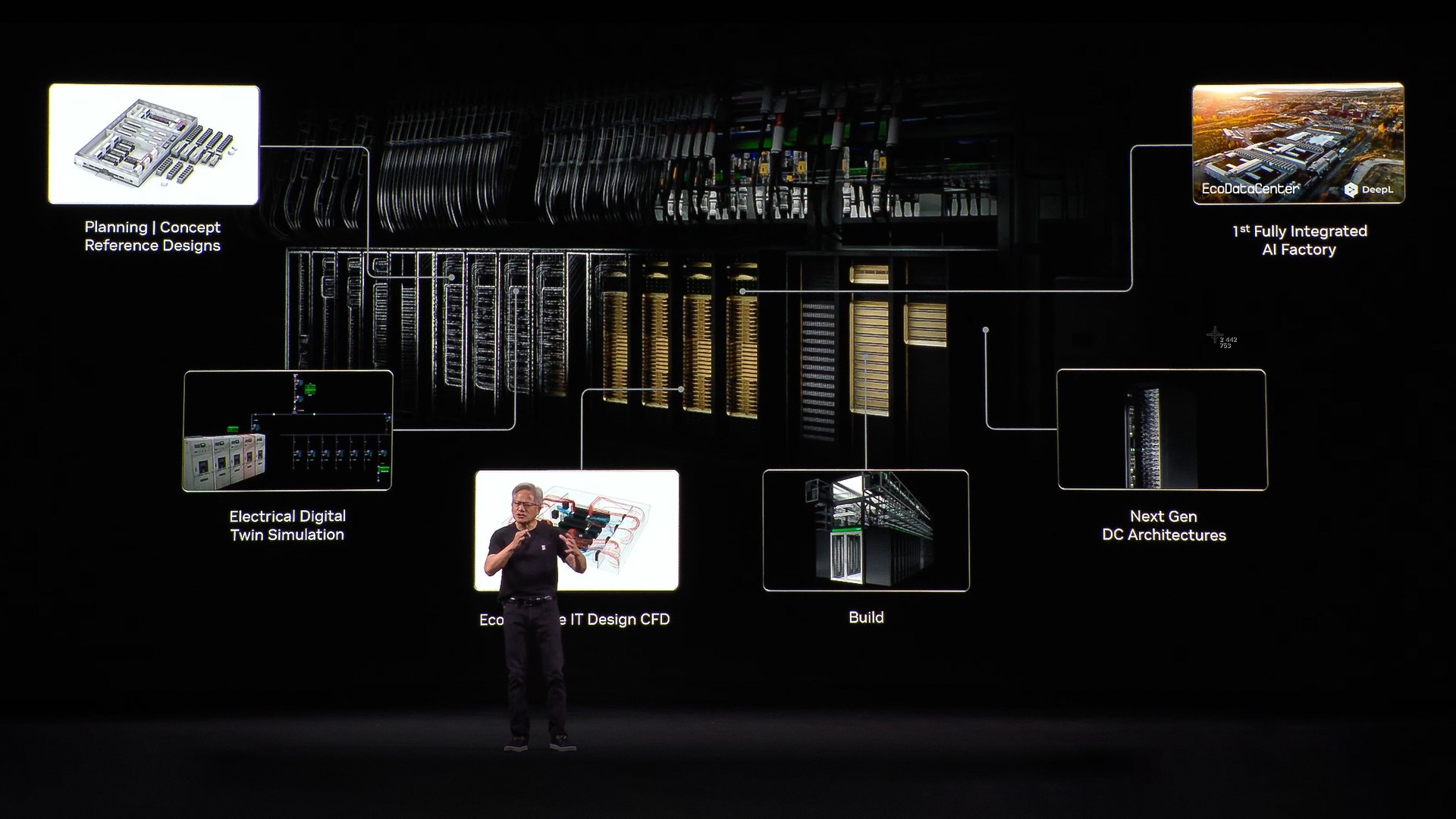
Nvidia CEO Jensen Huang highlighting EcoDataCenter in Paris in June 2025.

World's first AI factory

Now, the wooden-based solutions in Falun works for the world’s most demanding customers, operations and loads, driving the AI revolution.

In May 2025, Europe’s first deployment of a liquid-cooled Nvidia GB200 cluster happened in Falun.

This led Nvidia CEO Jensen Huang to highlight EcoDataCenter as “the world’s first fully integrated AI factory” during his keynote speech at the Nvidia GTC in Paris in June 2025.

Cloud and AI leaders such as Microsoft and Meta have conceded that wood is the future for data centers, by building facilities that partially rely on wooden elements.

This quick shift is thanks to the innovation of EcoDataCenter together with partners, as well as the superior customer experiences from our sites. Our Net Promoter Score among customers for our project deliveries is 100/100, surpassing all other actors within the data center industry.

DJI_20251015100209_0064_D
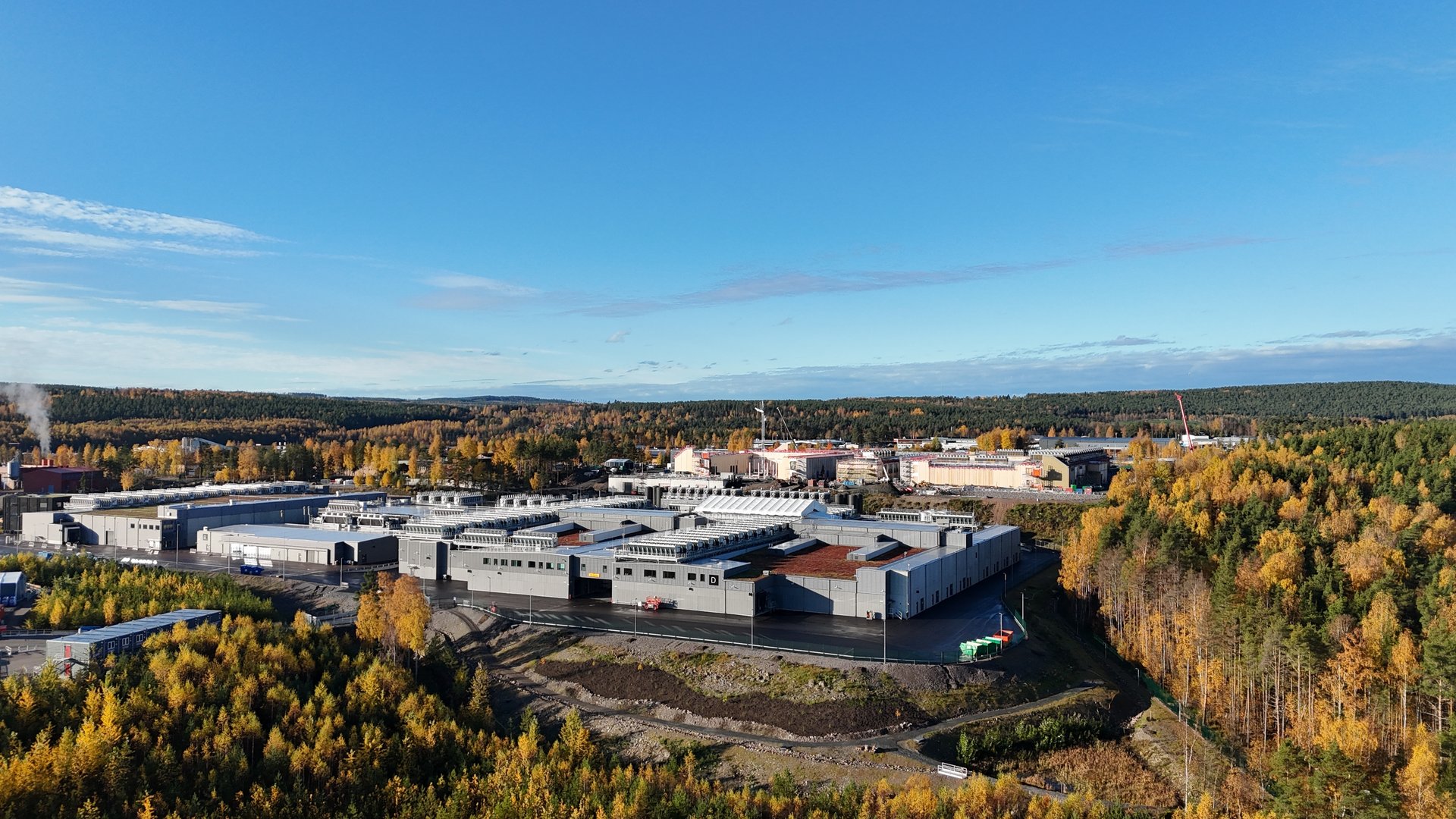
The Falun site in October 2025, with two new wooden data centers built above four operational data centers.

“Wood is extremely good when it comes to robustness. Much better than steel”

There is a strong sentiment, even within the construction industry, that wood is not safe.

The Swedish Council on Wood Construction highlighted in a Q&A session with Anders Rosenkilde, Adjunct Professor of Structural Engineering for Industrial Wood Construction at Lund University, the following:

“Wood as a load-bearing material in structures is just as safe from a fire perspective as other materials. There is a big difference between the combustible properties of the material and talking about how to achieve fire-safe structures. All materials have technical properties that must be taken into account when designing and building. Steel melts, concrete cracks, and wood chars. However, the properties of wood mean that it retains its load-bearing capacity for a long time if it burns, and its performance in terms of load-bearing capacity when exposed to fire is well known and can also be calculated.”

CLT was used in Germany, Austria and other parts of Central Europe during the 1990’s. But the mass market matured slowly, like forests, so production processes were not established enough to make it a cost-efficient alternative in the Nordics until the late 2000’s. Only then did large-scale production of CLT reach the wider construction market. 

“Now, it’s a very reliable material,” says Magnus Emilsson, CEO of Limträteknik and responsible for the technical construction of all EcoDataCenter buildings. 

“Wood is extremely good when it comes to robustness. Much better than steel”, explains Magnus.  

Robustness is one of three main fire safety criteria, the other two being origin and spreading.  

Some view wood as suboptimal in those regards. But when covered with non-flammable materials such as gypsum boards, the safety level of the bearing construction matches or exceeds that of widely used conventional materials. 

Magnus sums it up: “We build better wooden buildings than with conventional materials, because engineered wood (CLT) is a new method, so customers and regulatory bodies place higher demands on the material.” 

That, and because of unique wood properties (which we will see soon), EcoDataCenter’s buildings “could stand for hundreds of years, if maintained properly”, explains Magnus, and continues: “There is no built-in additional maintenance with a wooden building than with steel or concrete buildings”.  

The problem, he underscores, has not been that wood demands extra maintenance. It has rather been that conventional materials have been assumed to have little or no maintenance needs. 

It’s all about keeping the wood structures dry to ensure the load-bearing capacity is intact. EcoDataCenter has chosen an unconventional double layering of protection against water to guard the load-bearing capacity.

SKISS_EcoDataCenter_Falun_DSCF2151
SKISS_EcoDataCenter_Falun__DSF5125
SKISS_EcoDataCenter_Falun__DSF5389

Driving safety development by choosing wood

But getting the materials and products needed for the wooden construction to meet fire safety standards was not easy. 

For example, the plastic PVC mats used in high-demanding environments like hospitals are tested and classified for concrete or steel structures. No supplier guarantees were initially given, if such a product would be put down on EcoDataCenter’s CLT floor tiles. 

But we have insisted, in certain cases, to test materials for use in wooden constructions. The rationale for convincing suppliers has been our scale”, Magnus points out. 

The sheer size of these projects have made possible an acceleration of the technological development," he adds.

"You have driven that in terms of wooden construction in general. There are more solutions available now than when you started.”

In late 2025, after more than a year of development, EcoDataCenter received four new types of doors developed from scratch in collaboration with local businesses – doors that fit wooden constructions perfectly and weigh less, to make working conditions for data center employees better.

But what about the unique wooden properties that heighten the fire safety level?

SKISS_EcoDataCenter_Falun_DSCF2046
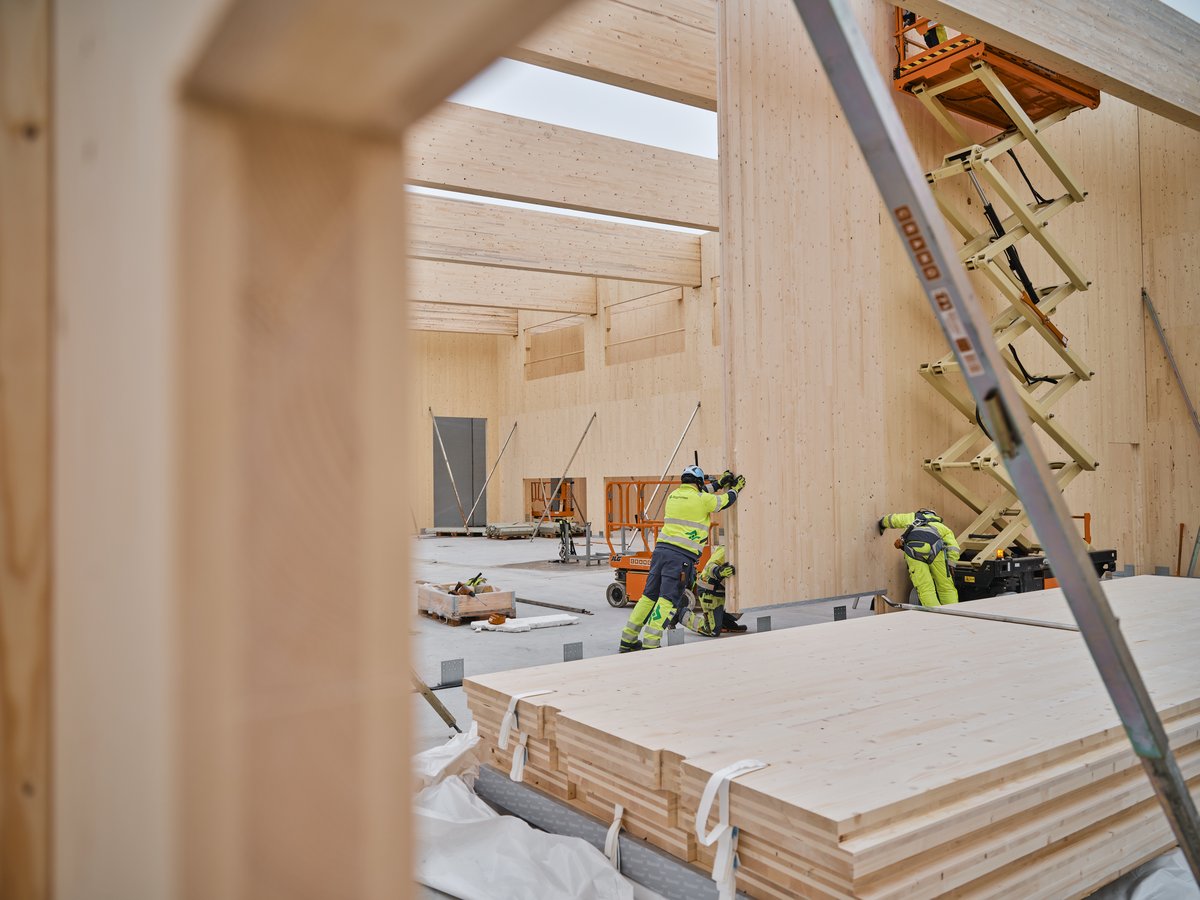
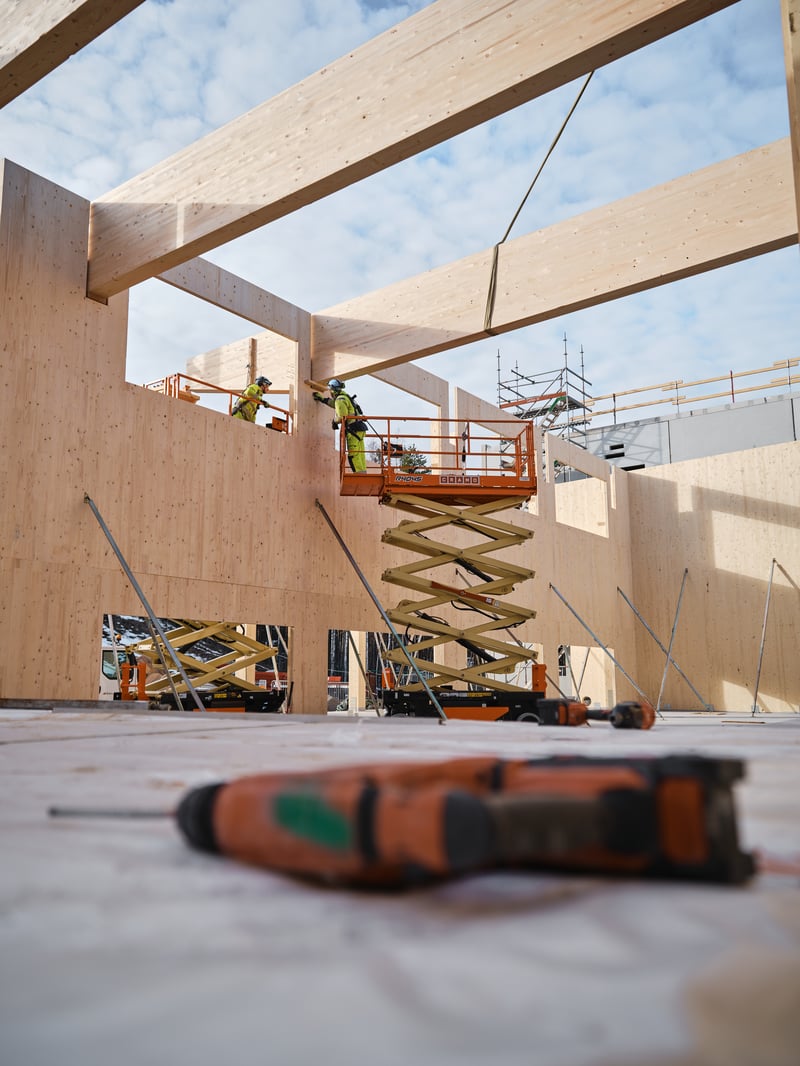
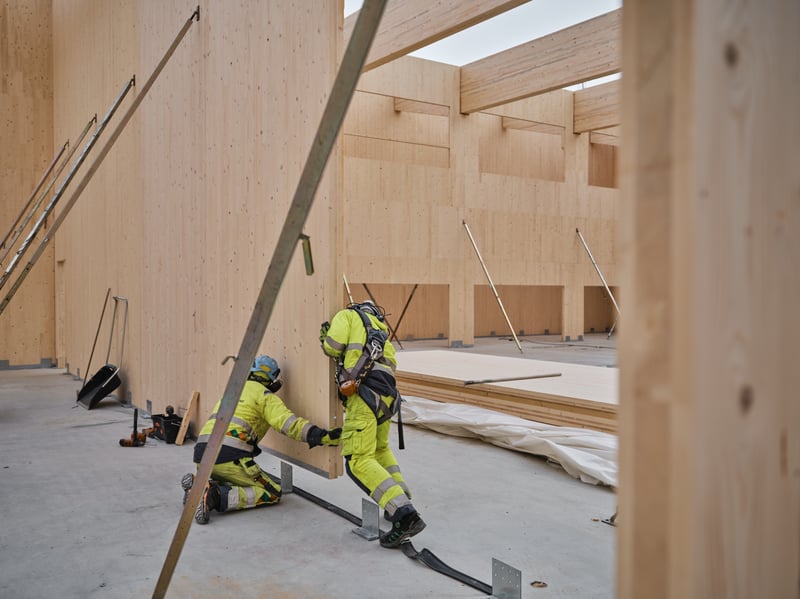
The construction workers find wood a pleasant material to build with.

“The fire rescue services prefer wooden buildings" – How unique wooden properties heighten fire safety level

In a mapping of fire incidents in modern timber constructions by the Swedish state research institute Rise, the occurrence of fires in wooden constructions between the years 1996 and 2023 was significantly lower compared to the overall population of buildings.

In total, almost 95,000 fires were reported in Sweden between 1996 and 2023.

Out of these, 166 were recorded where wood was the load-bearing construction material. For this time period, only seven spreadings past the initial fire cell were observed.

There are many fire cells in data centers. But none extra due to the wooden construction.

This comes down to how CLT wood behaves when ignited, EcoDataCenter’s CTO Mikael Svanfeldt highlights. 

During a fire, heat enters the wood. But what exits the wood are the gases freed through the pyrolytic process”, starts Mikael. 

The gases are the fuel for continued fire, he underscores. When wood is burnt, it chars.

The charring has such a strong isolating property of the inner layers that the pyrolyse stops, so no new gases are emitted to continue the fire”. 

CLT wood is, essentially, self-defeating in terms of fire. The energy needed to uphold a sustained fire that can damage the construction core cannot be accessed due to the material’s charring properties. 

Mikael Svanfeldt mentions an incident from a wooden construction of a school building, where tool batteries charging overnight without fire alarms or supervision had ignited and started burning the wooden surface. But when workers arrived in the morning, all they saw was some charred, sooty wall planks. The remedy was simple: sandpaper.

Mikael relays something he picked up during construction discussions regarding one of the data centers in wood, where builders repeatedly said that CLT is a favorite for fire rescue services.

It was as if they knew that the fire rescue services prefer wooden buildings over conventional materials,” he said.

466A4667
Combined with fire suppression systems, good ventilation, high ceilings, and adequate fire cells, a fire in a wooden data center is hard to imagine.

"Wood is predictable" – The preferred material for the age of safe low-emission construction

Johannes Näslund, a fire engineer at the local fire rescue services in the Falun/Borlänge region, can understand the adage that firefighters prefer wooden constructions. “Wood is predictable”, he starts. 

Firefighters, fire engineers or fire safety consultants will have differing opinions on the relative usefulness, security and stability of wood compared to conventional materials, he injects. 

But in general, they all become more worried about heat and fire in constructions with steel than in similar wooden constructions. 

We have a better opportunity to do our job safely and with proper risk evaluations when we come to wooden constructions”, Johannes says.

Steel loses its structural integrity around 500-550 degrees Celsius, but it is hard to determine its loadbearing capacity well before that in a fire scenario. And concrete dries out and cracks after sustained heat and fire exposure. 

Wood, on the other hand, and especially the CLT that is used by EcoDataCenter, behaves “nice and predictable” when ignited or heat-exposed. The surface chars, protecting the core of fresh, undamaged wood that keeps the elements structurally intact.

The standard fire curve, used to evaluate fire resistance in materials and buildings, is not fully applicable for wooden data centers, explains the fire engineer.

Data centers are special,” says Johannes Näslund, “because of the size and purpose of the building. A likely fire scenario in this type of building can be expected to be less intense compared to the standard fire curve, which means that the robustness of the construction is better than what standardized tests measure.”

This means wooden elements perform better than expected in fire scenarios, setting CLT on par with conventional materials for safety.

In combination with fire suppression systems, good ventilation, high ceilings, and adequate fire cells, a fully developed fire in a wooden data center is “hard to imagine”, he says. 

He also adds that Swedish construction codes are material neutral. If a building meets the requirements for withstanding fire for one, two or four hours, you can use any material.

CLT fulfills all of the requirements and safety standards in the building codes across Europe, North America and Australia, making it the preferred material for the age of low-emission construction.  
2025-07-04 (36)
EcoDataCenter is ranked Top1% by sustainability rating institute EcoVadis' survey of 250 industries globally

Conclusion – Power Progress: The New Standard for AI Infrastructure

EcoDataCenter started in 2014 to rethink the data center industry.

Five years later, EcoDataCenter 1 opened: the world’s first large-scale data center built with cross-laminated timber (CLT), powered purely by renewable energy.

After a decade of engineering a new path for the industry, EcoDataCenter has proven that the scaling trilemma is possible to solve with wood.

Wood results in 30% faster builds with lower costs and improved operational efficiency.

The result is a data center design with a net effect of embodied carbon close to zero and 2650 tonnes of biogenic CO₂e stored.

Today, EcoDataCenter operates a 80MW site in Falun, with a 600MW mega campus taking shape in Borlänge.

By building with up to 95% wood, EcoDataCenter pioneers a new model for sustainable digital infrastructure, underpinning the world’s most advanced AI workloads for hyperscalers and AI pioneers.

That is how progress is powered. Purely.

EcoDC_Rogsjön_26 april 2025_1.36.1 kompressed (1)

Shape the future

Solving the scaling trilemma with wood

Further Reading

Scientific resources on CLT construction

Cost efficiency

Design

Shorter build times

Fire and safety

Thermal performance/energy efficiency

Sustainability

Minimal waste

Wind loads and seismic resistance

Acoustic superiority

Weight and mass

Structural integrity

Adapted from D.R. Simeon et al (2024)